World War II put The Hill in an unusual position. Many of its families had come from Italy only a generation or two earlier, and Italy was now an enemy of the United States. The neighborhood’s answer, as its own history tells it, was to send more than a thousand of its young men into uniform.
A community with something to prove
The Hill 2000 Neighborhood Association, which publishes a history of the neighborhood on its website, says the community grew nervous during the war because Italy was the enemy. People wanted it understood that they were loyal Italian Americans, and military service was one of the clearest ways to show it.
More than a thousand in uniform
According to the association, upward of 1,020 Hill men wore the uniform during the war, and 23 were killed or never came back. Those figures come from the neighborhood association’s history. We were not able to find an independent count, so they are best read as the community’s own record of its contribution.
Some of the neighborhood’s best-known sons were among those who served. Yogi Berra, who grew up on The Hill (see our piece on Hall of Fame Place), enlisted in the Navy after his 1943 season with the Norfolk Tars, according to his SABR biography. He became a machine gunner and was aboard a rocket boat off the coast of Normandy on D-Day. SABR says he spent 10 days on the 36-foot craft before going back to his ship, the USS Bayfield.
Frank Borghi, the Hill-raised goalkeeper who would later help the United States beat England at the 1950 World Cup, served as an Army medic. The local history site Soccer Made in St. Louis says he took part in the Battle of the Bulge and the drive through western Germany in 1944 and 1945; his Wikipedia biography likewise says he was a medic in an infantry unit that fought at the Bulge. The Associated Press obituary published by Sports Illustrated says he earned a Bronze Star and a Purple Heart, and that he spent two years as a catcher in the St. Louis Cardinals organization before switching to soccer.
Where the names are kept
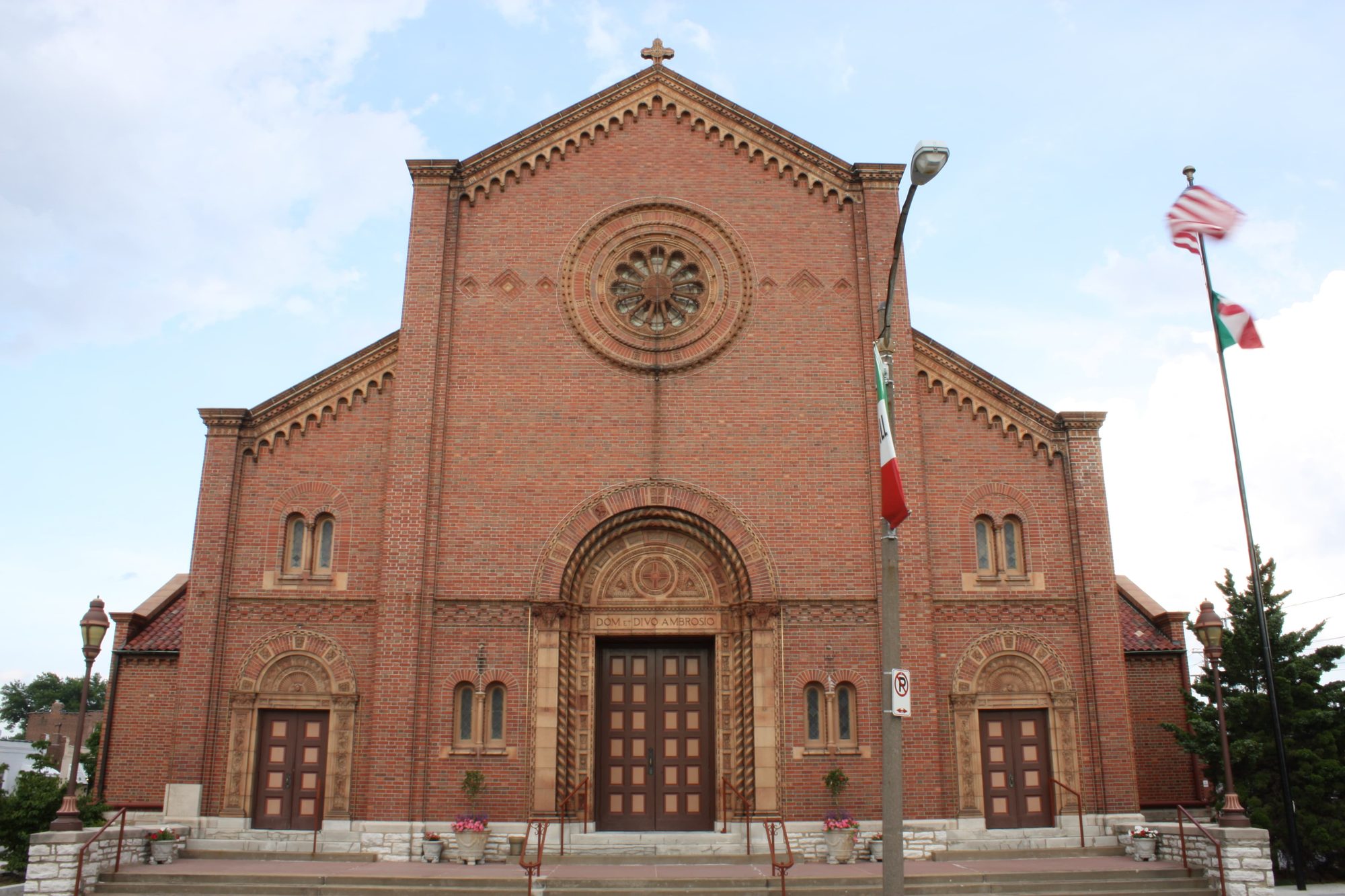
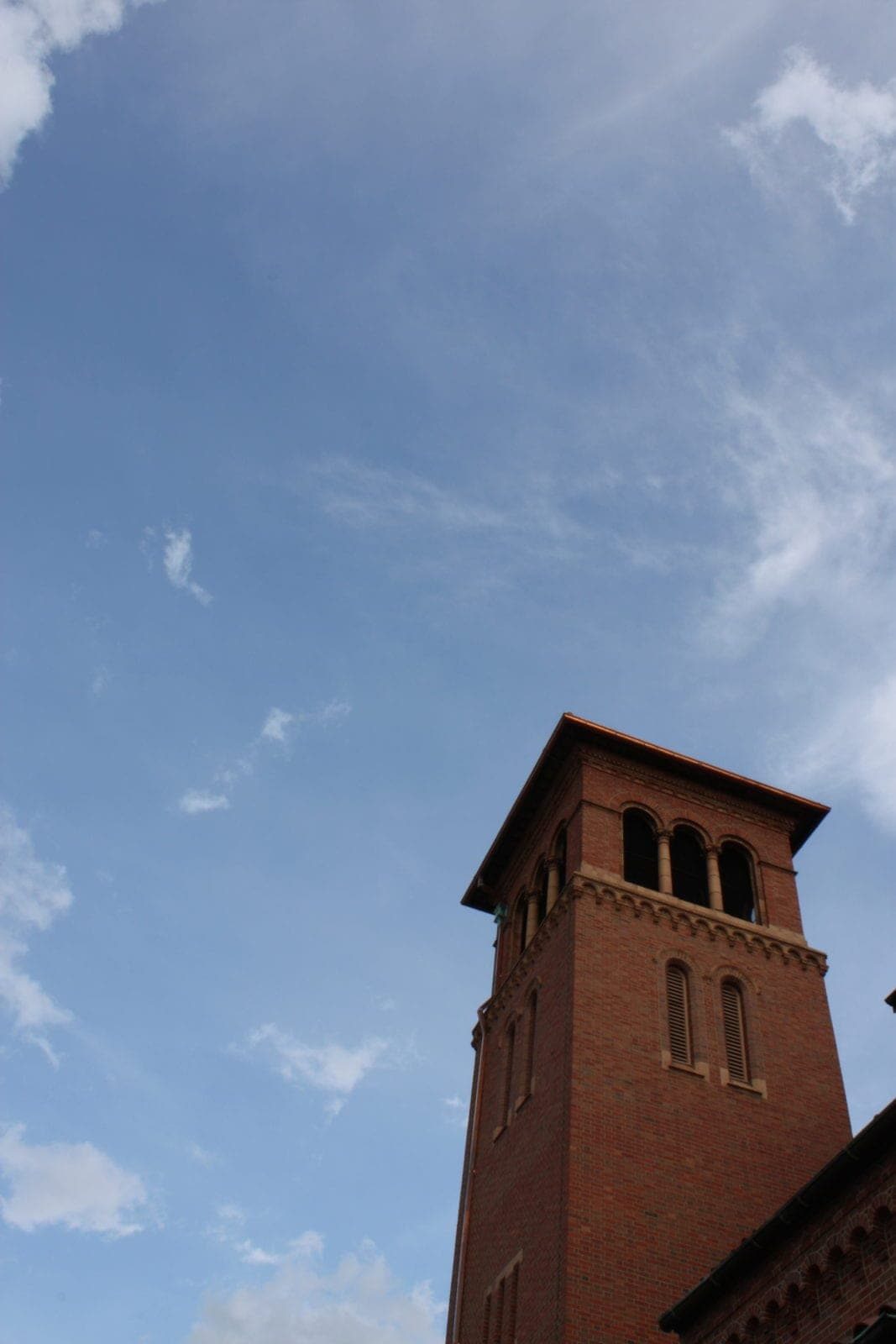
The men who died are remembered in two places on The Hill. The neighborhood association says their names appear on a bronze plaque at the rear of St. Ambrose Church, the parish at the center of neighborhood life (read more in our history of St. Ambrose). The same names are also inscribed on a column in Piazza Imo, the public square that KSDK described as an extension to St. Ambrose.
Both sites are easy to include in a walk around the neighborhood. The plaque is inside the church, so visitors should be mindful of Mass times and parish activities.
After the war
The association’s history describes the postwar years as a period of growth. With help from the GI Bill, young veterans married, built homes or earned professional degrees. Manufacturers in the area, including Magic Chef, Marlo Coil and Style Craft, employed hundreds, and at one point three furniture stores operated in the neighborhood.
What we could not verify
We looked for detailed accounts of daily life on The Hill during the war years, such as rationing, factory work or home-front drives, but did not find sources specific enough to report.
For more on the neighborhood’s past, see our History of The Hill timeline.
Sources: Hill 2000 (hillstl.org), SABR, Soccer Made in St. Louis, Wikipedia, Sports Illustrated (AP), KSDK