Long before toasted ravioli and bocce, The Hill was about clay. The deposits under this high ground south of Forest Park drew waves of workers, and the Italians who came to dig it turned the area into one of the country’s best-known Italian neighborhoods.
The clay comes first
Clay deposits were found in the area in the 1830s, and Irish immigrants are credited with the discovery, according to Wikipedia’s history of the neighborhood. The City of St. Louis notes that the Evens and Howard Fire Brick Company and its clay mines opened in 1854 and 1855. More than a dozen brick and tile factories followed along the River Des Peres.
The first workers included Black Americans, Germans and Irish, according to TheSTL. Railroad tracks, the river and the mines themselves left the area somewhat cut off from the rest of the city.
The Italians arrive
Italians began arriving in the late 19th century. Most came from northern Italy, especially Lombardy, though many also came from Sicily. From the 1880s to 1924, Italian immigrants outnumbered every other group on The Hill, according to the city.
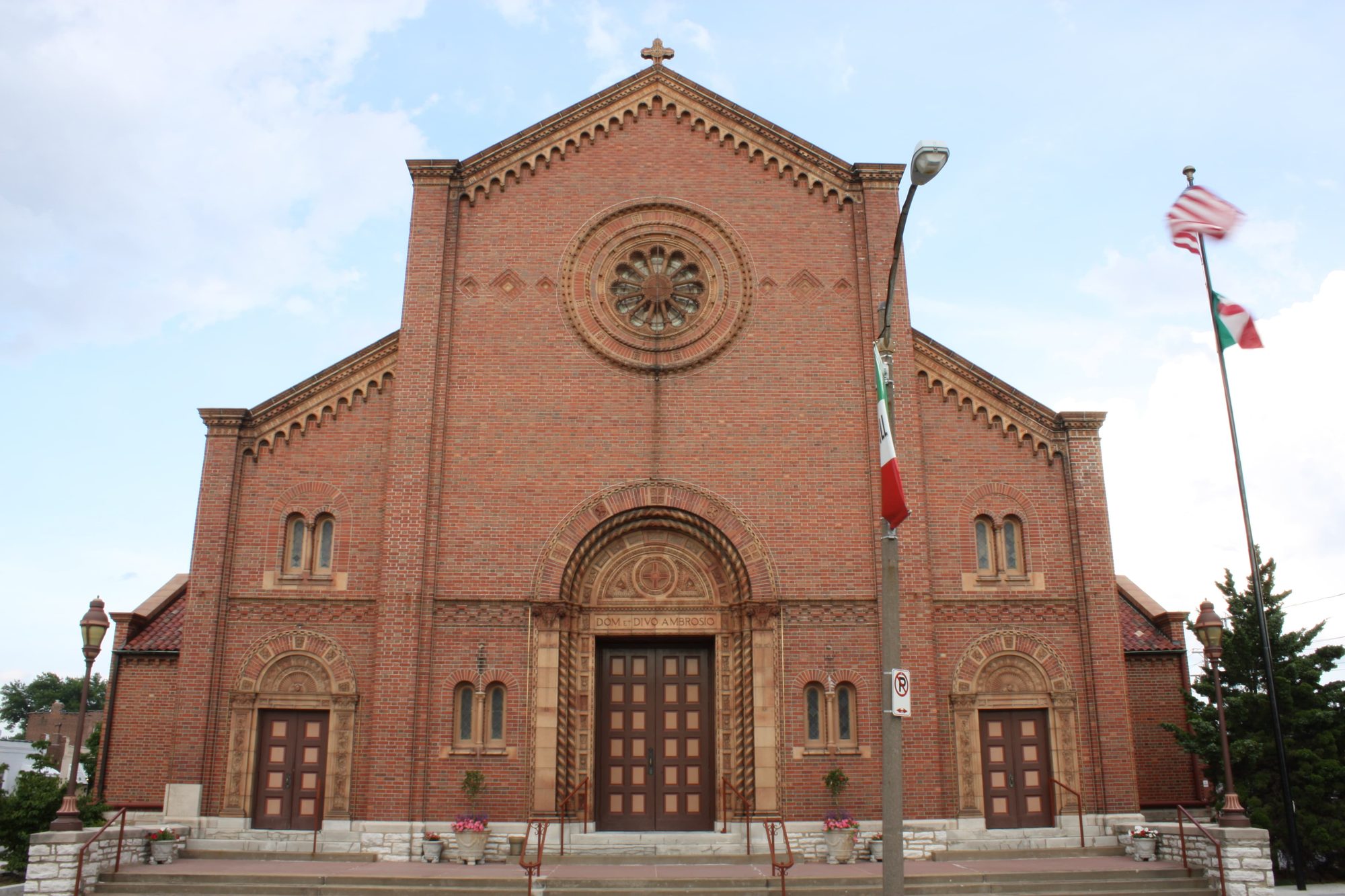
The earliest arrivals were mostly men who lived in boarding houses. As their families joined them, the area became a largely self-sufficient community, with its own work, shops, church and school. Grocers and bakers opened to serve the growing population, and the separate Lombard and Sicilian parishes, St. Ambrose and Our Lady Help of Christians, opened in 1903 and 1900.
What the name means
The neighborhood takes its name from St. Louis Hill, the highest point in the city, a few blocks south near Arsenal Street and Sublette Avenue. Officially, The Hill is bounded by Manchester Avenue on the north, Columbia and Southwest avenues on the south, Kingshighway on the east and Hampton Avenue on the west. It covers just under a square mile and had 2,487 residents in 2020.
A legacy you can still see
The clay industry shaped who lived here for generations. TIME reported in 1974 that many residents were descended from Lombard immigrants who had worked the clay mines beneath the neighborhood.
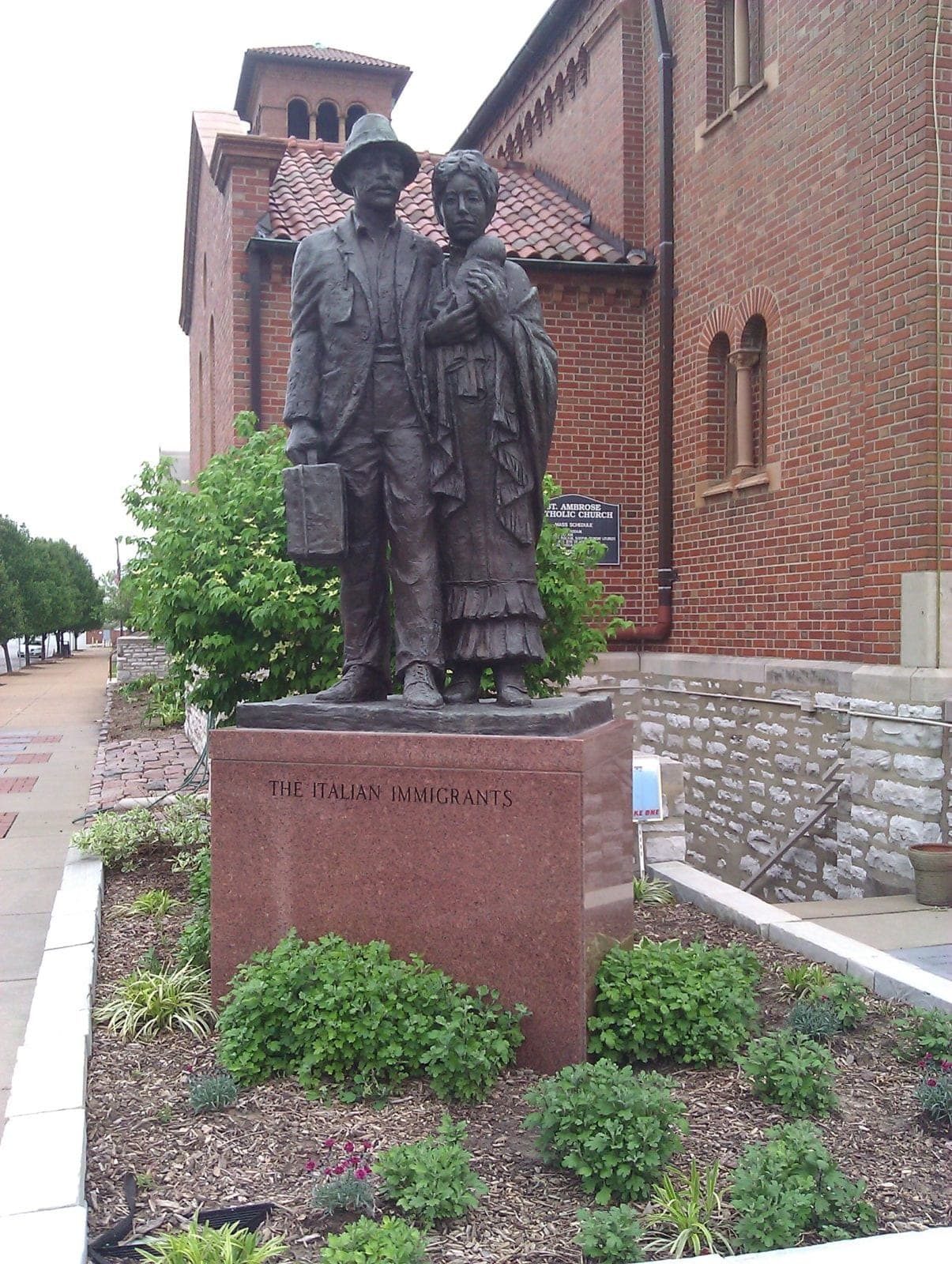
The bronze statue The Italian Immigrants, a 1972 work by Rudolph Torrini owned by Hill 2000, honors those first families. It shows a young couple with a newborn and a single suitcase.
For more on the neighborhood’s past, see our History of The Hill timeline.
Sources: Wikipedia, City of St. Louis, TheSTL, La Gazzetta Italiana, TIME (1974), First Alert 4, Regional Arts Commission.